Advanced Travel Document Strategies: 2026 Guide to Digitalization
The Evolution of Travel Document Management
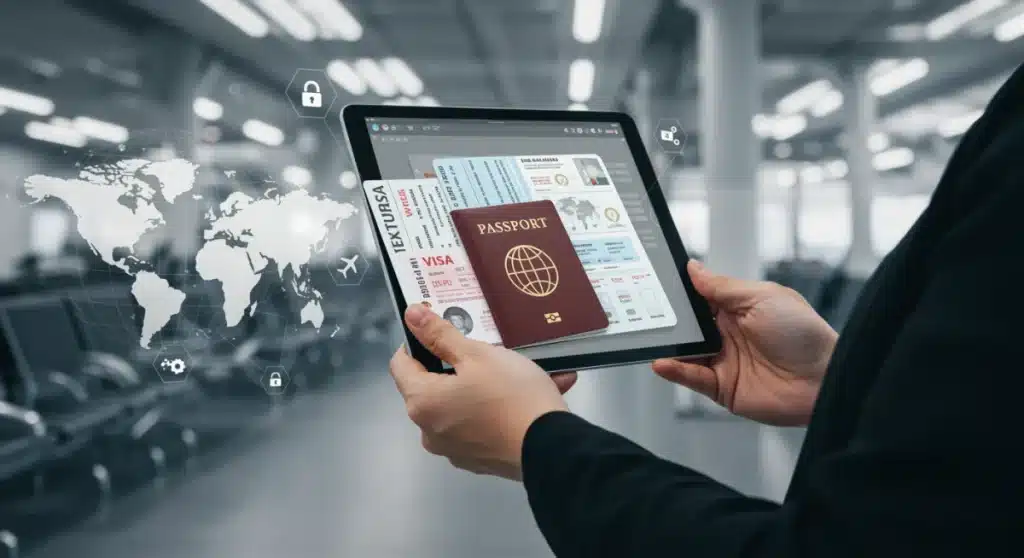
The landscape of international travel is undergoing significant transformation, driven by technological advancements and heightened security concerns. Travelers in 2026 face a new reality where traditional paper documents are increasingly complemented, if not replaced, by digital counterparts.
This shift necessitates a proactive approach to managing personal identification and travel authorizations, moving beyond simple physical storage to robust digital solutions. Understanding these evolving requirements is crucial for any modern globetrotter.
The integration of biometrics, blockchain, and AI-powered verification systems is fundamentally changing how passports and visas are secured and processed, demanding greater awareness and adoption of Advanced Travel Document Strategies.
Digitalization: The Core of Modern Travel
Digitalization stands at the forefront of these transformations, offering unprecedented levels of convenience and efficiency for travelers. Governments and international bodies are actively promoting paperless solutions, streamlining entry and exit processes across borders.
This push towards digital documents reduces the risk of loss or damage inherent with physical papers, while also speeding up authentication procedures. Travelers can expect more widespread adoption of digital identities and verifiable credentials.
Embracing digital platforms for passports and visas is no longer an optional convenience but a necessity for implementing Advanced Travel Document Strategies effectively in the coming years.
Emerging Digital Identity Platforms

Emerging Digital Identity Platforms
Several countries are piloting or have already implemented digital identity platforms that integrate passport and visa information. These systems often rely on secure mobile applications and encrypted databases, ensuring data integrity and accessibility.
These platforms aim to create a single, verifiable digital identity that can be used for various travel-related transactions, from flight check-ins to immigration clearance. The security protocols underpinning these platforms are paramount to their success and acceptance.
- Government-issued digital IDs linked to national databases.
- Blockchain-based verifiable credentials for enhanced security.
- Interoperability standards for seamless cross-border recognition.
The Role of Biometrics in Digital Documents
Biometric data, including fingerprints, facial recognition, and iris scans, is becoming an integral part of digital travel documents. This technology provides an unparalleled layer of security, making it incredibly difficult for unauthorized individuals to use stolen or fraudulent identities.
Biometric authentication speeds up processing times at borders, as it offers a quick and reliable method of verifying a traveler’s identity against their digital records. This integration represents a significant leap forward in secure travel.
Understanding how your biometric data is stored and used within these digital frameworks is a key component of Advanced Travel Document Strategies.
Securing Your Digital Passport and Visas
While digitalization offers convenience, it also introduces new security challenges that travelers must address proactively. Protecting your digital travel documents from cyber threats and unauthorized access is as critical as safeguarding physical ones.
Implementing strong cybersecurity practices and utilizing secure storage solutions are fundamental steps in preventing potential breaches. The responsibility for digital security increasingly rests with the individual traveler.
A comprehensive approach to digital security is non-negotiable for anyone adopting Advanced Travel Document Strategies in 2026 and beyond.
Best Practices for Digital Security
Securing digital travel documents involves a multi-faceted approach, starting with the devices used to store them. Strong passwords, multi-factor authentication, and up-to-date antivirus software are basic requirements for any smartphone or tablet carrying sensitive information.
Travelers should also be wary of public Wi-Fi networks when accessing or managing their digital documents, opting for secure private networks or VPNs instead. Regular backups of digital documents to encrypted cloud storage further mitigate risk.
- Use strong, unique passwords for all travel-related accounts.
- Enable two-factor authentication (2FA) for added security layers.
- Regularly update device software and security applications.
Understanding Data Privacy and Compliance
With the rise of digital documents, understanding data privacy regulations and compliance becomes paramount. Travelers need to be aware of how their personal data is collected, stored, and shared by various entities, from airlines to immigration authorities.
Different countries have varying data protection laws, and travelers should familiarize themselves with these policies, especially when using international digital platforms. This knowledge empowers individuals to protect their privacy rights.
Staying informed about privacy policies is an essential, often overlooked, aspect of Advanced Travel Document Strategies.
Managing Multiple Visas and Electronic Travel Authorizations
The complexity of international travel often involves managing multiple visas, electronic travel authorizations (ETAs), and other entry requirements for various destinations. Digital tools are simplifying this process, offering centralized platforms for application and tracking.
These digital management systems help travelers keep track of application statuses, expiry dates, and specific entry conditions for each country. This reduces the administrative burden and potential for errors that can derail travel plans.
Leveraging these tools is a smart move for anyone looking to implement Advanced Travel Document Strategies efficiently.
Centralized Digital Portals
Many governments are developing centralized digital portals where travelers can apply for and manage all their visa and ETA applications. These portals often provide real-time updates and notifications, ensuring travelers are always informed.
The aim is to create a single point of access for all necessary travel authorizations, reducing the need to navigate multiple government websites. This consolidation is a significant benefit for frequent international travelers.
- Single sign-on for multiple visa applications.
- Automated reminders for upcoming expiry dates.
- Integrated payment gateways for application fees.
Integrating Travel Documents with Smart Devices
The integration of travel documents with smart devices, such as smartphones and smartwatches, offers unparalleled convenience. Travelers can carry all necessary documentation on their person, accessible with a tap or a glance.
This integration extends beyond simple storage; it includes features like automatic updates, integration with travel itineraries, and even contactless verification at checkpoints. The future of travel is undeniably linked to these smart integrations.
Seamless integration with smart devices is a cornerstone of effective Advanced Travel Document Strategies.
Contingency Planning for Digital Document Access
Even with the most robust digital systems, unforeseen circumstances can arise, potentially hindering access to your digital travel documents. Power outages, lost devices, or technical glitches can all pose significant challenges.
Developing a comprehensive contingency plan is therefore essential to ensure uninterrupted travel. This involves having backup access methods and understanding how to recover your documents in an emergency.
Being prepared for digital access issues is a critical, often overlooked, aspect of Advanced Travel Document Strategies.
Offline Access and Backup Solutions
Ensuring offline access to your digital documents is a vital component of any contingency plan. This might involve downloading encrypted copies to multiple devices or printing physical backups of critical information, stored securely.
Cloud-based backup solutions with strong encryption provide an additional layer of security and accessibility, allowing recovery from any internet-enabled device. The key is redundancy and accessibility.
- Store encrypted copies on a USB drive or secure cloud service.
- Keep physical copies of essential documents in a separate location.
- Familiarize yourself with emergency contact procedures for digital platforms.
Emergency Procedures for Lost or Compromised Devices
In the event of a lost or compromised device containing digital travel documents, immediate action is necessary. This includes remotely wiping the device, changing passwords for all linked accounts, and reporting the loss to relevant authorities.
Having a pre-defined emergency protocol can significantly reduce stress and potential complications during travel. Knowing who to contact and what steps to take can make a substantial difference.
Effective emergency planning is a hallmark of truly Advanced Travel Document Strategies.
Legal and Regulatory Frameworks in 2026
The rapid evolution of digital travel documents is paralleled by ongoing developments in legal and regulatory frameworks. Governments worldwide are working to establish harmonized standards for digital identity and cross-border data exchange.
These frameworks aim to ensure the legality, security, and interoperability of digital documents while safeguarding individual privacy rights. Staying informed about these international agreements and national laws is crucial for travelers.
Understanding the legal landscape is an integral part of implementing Advanced Travel Document Strategies effectively.
International Standards and Agreements
Organizations like the International Civil Aviation Organization (ICAO) are instrumental in developing global standards for e-passports and digital travel credentials. These standards facilitate seamless recognition and acceptance across different nations.
Bilateral and multilateral agreements between countries are also defining how digital documents are exchanged and verified, paving the way for more integrated travel ecosystems. These agreements are constantly evolving.
Awareness of these international efforts contributes to a comprehensive understanding of Advanced Travel Document Strategies.
National Laws and Compliance for U.S. Citizens
For U.S. citizens, understanding national laws regarding digital travel documents and compliance with international regulations is paramount. The Department of State and other federal agencies provide guidelines on acceptable forms of identification and travel authorization.
Travelers should regularly consult official government websites for the latest information on digital document requirements and any changes to entry/exit procedures. Non-compliance can lead to significant travel disruptions.
Adhering to national laws is a fundamental element of successful Advanced Travel Document Strategies.
Future Trends in Travel Document Innovation
Looking beyond 2026, the innovation in travel document management shows no signs of slowing down. Emerging technologies promise even more integrated, secure, and personalized travel experiences, pushing the boundaries of what is possible.
Concepts like self-sovereign identity, where individuals have complete control over their digital credentials, are gaining traction. This empowers travelers with greater autonomy over their personal data.
Anticipating these future trends is key to developing truly perceptive and Advanced Travel Document Strategies.
AI and Machine Learning for Predictive Analytics
Artificial intelligence and machine learning are being deployed to enhance security screening, predict travel patterns, and personalize the immigration experience. These technologies can identify anomalies and potential threats with greater accuracy and speed.
Predictive analytics could allow for pre-clearance programs that expedite travel for trusted individuals, based on their historical travel data and risk assessment. This moves towards a more proactive security posture.
The integration of AI into travel document verification offers exciting prospects for Advanced Travel Document Strategies.
Quantum Computing and Enhanced Encryption

Quantum Computing and Enhanced Encryption
As digital threats become more sophisticated, the need for advanced encryption methods grows. Quantum computing, while still in its nascent stages, holds the promise of developing unbreakable encryption protocols for sensitive travel data.
This next generation of cryptography will be essential in protecting digital passports and visas from future cyberattacks, ensuring the long-term security of digital identities. The race for quantum-resistant encryption is already underway.
Investing in quantum-safe technologies will be a crucial aspect of future-proofing Advanced Travel Document Strategies.
Preparing for the 2026 Travel Landscape
The year 2026 marks a significant juncture in the evolution of travel document management, requiring travelers to adapt and embrace new technologies. Preparation is key to navigating this evolving landscape successfully and without undue stress.
Adopting a proactive mindset towards digitalization and security will ensure that your travel experiences remain seamless and enjoyable. The benefits of these advancements far outweigh the initial learning curve.
Being well-prepared is the ultimate goal of understanding and implementing Advanced Travel Document Strategies.
| Key Aspect | Description |
|---|---|
| Digitalization Focus | Transition from physical to digital passports and visas. |
| Enhanced Security | Biometrics and advanced encryption for data protection. |
| Contingency Planning | Preparing for offline access and device loss. |
| Legal Compliance | Staying informed on international and national regulations. |
Frequently Asked Questions About Digital Travel Documents
Digital travel documents offer enhanced security through biometrics and encryption, increased convenience with centralized access, and faster processing times at borders. They reduce the risk of loss or damage compared to physical documents and streamline the overall travel experience, aligning with Advanced Travel Document Strategies.
To secure digital documents, use strong passwords, enable multi-factor authentication, and keep software updated. Avoid public Wi-Fi for sensitive transactions and maintain encrypted backups. Understanding data privacy policies also forms a crucial part of these Advanced Travel Document Strategies.
While adoption is growing rapidly, acceptance of digital travel documents varies by country and specific agreements. Travelers should always verify the entry requirements of their destination. Many nations are actively integrating these solutions, making them a cornerstone of Advanced Travel Document Strategies.
Immediately report the loss, remotely wipe the device if possible, and change all associated account passwords. Have encrypted backups and physical copies stored separately. A robust contingency plan is vital for effective Advanced Travel Document Strategies.
AI will enhance security screening and predictive analytics, while quantum computing aims to provide unbreakable encryption against future cyber threats. These technologies promise to make digital travel documents even more secure and efficient, driving the next iteration of Advanced Travel Document Strategies.
Looking Ahead
The transition to advanced digital and secure travel document management is not merely a technological upgrade; it represents a fundamental shift in how we approach international travel.
As 2026 unfolds, travelers must remain vigilant and informed about evolving regulations and technological advancements.
The integration of biometrics, AI, and robust encryption protocols will continue to redefine security and convenience, making Advanced Travel Document Strategies essential for every global citizen.
Staying ahead of these changes will ensure smoother, safer, and more efficient journeys in an increasingly digital world.